Your garage door opens and closes an average of 1,500 times a year, and every one of those cycles depends on the springs. For homeowners in Santa Rosa and across Sonoma County, knowing the warning signs of a failing spring can mean the difference between a quick fix and a jammed door, a bent panel, or a burned-out opener.
This guide covers how long garage door springs are supposed to last, the specific signs of a spring going bad, and why waiting too long makes the repair bill bigger.
Scheduling garage door repair in Santa Rosa before a spring fully fails costs far less than replacing the opener and cables that break down with it.
Key Takeaways
- Most residential garage door springs last 7 to 10 years, or roughly 10,000 open-and-close cycles.
- A worn spring rarely fails without warning. Look for a heavy-feeling door, jerky movement, loud bangs, gaps in the coil, and slow opening.
- A weak spring forces the opener, cables, and panels to do work they weren’t built for, which shortens the life of every other part.
- Spring replacement is not a DIY job. Torsion springs hold hundreds of pounds of stored energy and can cause serious injury.
- Replacing springs before they snap costs less than replacing an opener, cables, and a bent panel together.
Springs Matter More Than Most Homeowners Realize
The springs do the heavy lifting on a garage door.
A standard double door weighs 150 to 250 pounds, and steel or wood carriage doors can weigh a lot more. The opener isn’t strong enough to lift that weight on its own. The springs counterbalance the door so the motor only has to guide it up and down.
When the springs weaken:
- The opener suddenly has to pull far more weight than it was designed for
- The cables get yanked with more force
- The panels flex at the hinges
- Every part of the system starts wearing out faster
Spring replacement is one of the most common reasons homeowners call for garage door repair in Santa Rosa, and catching it early keeps one worn part from taking others down with it.
The Lifespan of Garage Door Springs
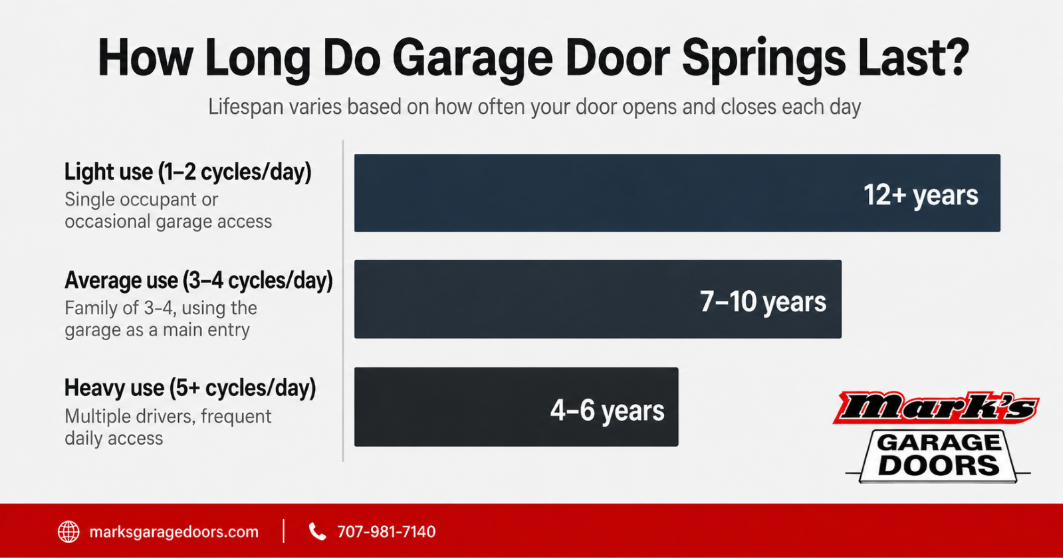
Garage door springs have a finite lifespan measured in cycles, not years. One cycle is one full open and one full close.
- Standard torsion springs: rated for about 10,000 cycles
- High-cycle torsion springs: rated for 20,000 to 30,000 cycles (available at higher cost)
- Extension springs: roughly 10,000 cycles as well, but they wear differently and are less common on modern doors
For a household that opens the garage 3 to 4 times a day, that comes out to 7 to 10 years. Families with teenage drivers or people who use the garage as their main entry can hit that cycle count in 4 to 6 years.
Springs don’t account for how the calendar looks. What matters is how many times the door has moved.
7 Warning Signs Your Springs Are Wearing Out
Here’s what to watch for. If you notice 2 or more of these, it’s time to call a pro.
1. The Door Feels Heavy When Lifted Up by Hand
How to test it: Pull the release cord on your opener, then try to lift the door manually. A healthy door should lift smoothly and stay open about 3 to 4 feet off the ground on its own.
If it feels like dead weight, or drops the moment you let go, the springs have lost tension. This is the clearest sign of a failing spring.
Only do this test if the door is fully closed. Never disengage the opener on a partially open door.
2. The Door Opens Slowly or Jerks
A door that used to glide up in 12 seconds and now takes 20 is telling you something. The same goes for a door that hesitates halfway up, shudders, or moves in fits and starts.
The opener is straining to make up for what the springs used to do. You may also hear the motor working harder than before.
3. Loud Banging Sounds
A snapped spring sounds like a gunshot or a heavy piece of wood cracking. Homeowners often hear it in the middle of the night when temperature changes cause the metal to contract.
If you walk into the garage and the door won’t open, or opens crooked, a broken spring is the most likely reason.
4. Visible Gaps in the Spring Coils
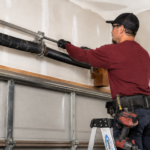
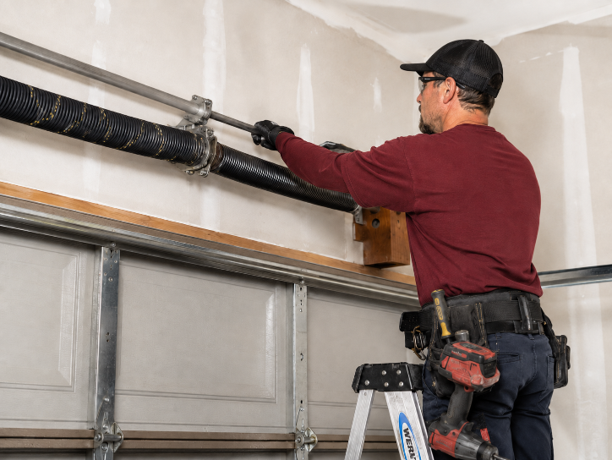
Torsion springs are tightly wound steel coils mounted on a bar above the door. When they’re healthy, the coils sit flush against each other.
Look for:
- A 2 to 3 inch gap somewhere along the spring (this means it’s already broken)
- Rust spots or corrosion along the coils
- Stretched or uneven spacing between coils
5. The Door Opens Crooked
Most double doors have 2 torsion springs. When one weakens or breaks, the other has to carry the load alone, and the door starts lifting unevenly.
You may see the door tilt as it opens, one side lag behind the other, or hear scraping along the tracks.
6. Cables Look Loose, Frayed, or Off the Drum
The cables run from the bottom corners of the door up to drums on the torsion bar. When springs weaken, cables often slip off the drums or start fraying from the extra strain.
Watch for:
- Cables hanging loose along one side
- Visible fraying or rust
- Cables that have jumped off the drum entirely
Bad cables and bad springs almost always go together. Once one starts failing, the other is not far behind.
7. The Opener Strains, Hums, or Reverses on its Own
A garage door opener is a helper, not a workhorse. When it’s forced to lift the full weight of the door because the springs aren’t pulling their share:
- The motor overheats
- The gears wear out
- Safety sensors may trigger reversals
If your opener sounds like it’s straining, or the door reverses partway up for no clear reason, the springs are likely the real culprit.
What a Failing Spring Does to the Rest of Your Door
This is the part most homeowners miss. A weak spring doesn’t just make the door harder to open. It puts every other component under stress.
The Opener
A residential opener is rated for a properly balanced door. When it has to lift 200 pounds instead of 20, the motor burns out years earlier than it should.
Opener replacements run $400 to $700 installed, compared to $200 to $400 for spring replacement.
The Cables
Extra tension from weak springs stretches and frays cables faster. A snapped cable can whip through the garage with enough force to cause injury or damage.
The Door Panels
Uneven lifting flexes the panels at the hinges. Over time this bends the top panel, cracks the seams, or pulls the rollers out of alignment.
Panel replacements on a double door can run $600 to $1,500.
The Tracks and Rollers
When the door lifts crooked, rollers grind against the tracks, wear out faster, and can jump off the rail entirely.
Waiting on a spring replacement to save $250 today can easily cost $1,000 or more in repairs 6 months from now.
Spring Replacement is Not a DIY Project
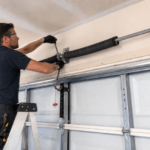
Torsion springs store hundreds of pounds of tension. When they’re wound tight, they’re holding enough energy to break bones, knock out teeth, or worse. Every year, DIYers end up in emergency rooms after trying to replace springs themselves.
Beyond the safety issue, spring replacement requires:
- Matched springs sized to the specific door weight and height
- Proper winding to exact turns (usually 7.5 to 9 turns for standard doors)
- Adjustment of cables and drums at the same time
- Balancing the door after installation
A trained garage door technician can often complete these repairs on the same day. Mark’s Garage Doors carries the right springs, tools, and 24 years of experience installing them safely in Marin and Sonoma County homes.
Extension springs (the older style, mounted along the tracks) are equally dangerous. Even though they may look simpler than torsion springs, they can whip loose if not disconnected correctly. Always call a professional.
Don't Wait for a Spring to Snap, Schedule an Inspection
If your garage door is showing any of the warning signs above, don’t wait for the spring to snap. Getting ahead of it protects your opener, your cables, your panels, and your Monday morning.
Contact us online or call Mark’s Garage Doors at (707) 981-7140 to schedule a garage door repair or an inspection. You can expect straight answers, fair pricing, and craftsmanship you can count on.
Frequently Asked Questions
How often should I have my garage door springs inspected?
Once a year is a good baseline. Homeowners who use the garage as their main entry, or who have doors older than 5 years, should have a professional check the springs annually as part of a full tune-up.
How long does a spring replacement take?
A trained technician can usually replace a set of torsion springs in 60 to 90 minutes, including balancing the door and testing the opener.
Should I replace both springs at once, even if only one is broken?
Yes. Both springs have gone through the same number of cycles. If one has failed, the other is close behind. Replacing them together avoids a second service call in a few months and keeps the door balanced.

Owner / Founder
Mark Wilson is the owner and founder of Mark’s Garage Doors, a locally owned and operated company serving Sonoma County and the North Bay. Since founding the business, Mark has built a reputation for expert craftsmanship, responsive service, and honest communication. He specializes in residential and commercial garage door installation, service, and repairs, offering custom solutions designed for durability, performance, and curb appeal.
With decades of hands-on experience, Mark continues to lead his team with a focus on reliability, safety, and customer satisfaction—values that have made Mark’s Garage Doors a trusted name in the region.