If your garage door suddenly starts squeaking, grinding, popping, rattling, or humming in a new way, it’s usually your door’s way of saying there’s something wrong.
This guide is written for homeowners who don’t know where to look first. It’ll walk you through a safe inspection you can do without special training and flag the stuff you should only leave to professionals.
This guide is easy and simple for folks searching for garage door maintenance in Santa Rosa, where daily use, temperature swings, and plain old wear-and-tear add up over time.
Before You Start: Safety First
Best practice: Treat your garage door like the heavy moving wall it is.
Before you start:
- Keep kids/pets away while testing
- Close the door when checking hardware (safer and more stable)
- Grab a sturdy step stool if needed
- Wear gloves and eye protection if you’re near dusty tracks/hardware
Do not touch or adjust any tension springs, cables, or brackets. All of these parts are under heavy tension and should only be inspected and adjusted by experienced professionals.
Identify the Noise Type
Stand inside the garage, run the door once, and listen carefully.
Common Noise Types and What They Mean
- Squeaking / chirping: dry rollers, hinges, bearings, or lack of lubrication
- Grinding / scraping: track issue, damaged roller, misalignment, debris in track
- Rattling / clanking: loose hardware, loose opener chain/belt area, worn rollers
- Popping / banging: door binding in track, spring tension changes, shifting hardware
- Humming / motor noise but door struggles: opener strain, door balance issue, travel limits, force settings, or mechanical drag
If you’ve hired an inspector for garage door maintenance in Santa Rosa, record a quick video (sound and view of the door) to avoid any guesswork.
Do the 2-Minute Visual Check with the Door Closed
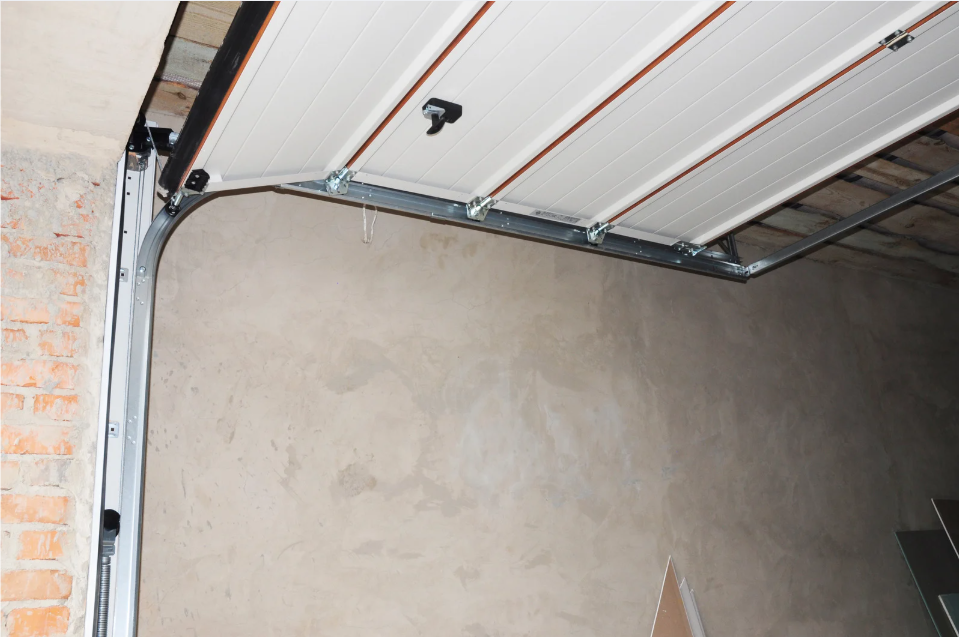
With the door down, walk the inside perimeter and look for obvious issues.
Look For:
- Loose bolts on hinges (you’ll often see a hinge wobble)
- Rollers that look chipped/cracked (especially if they’re old plastic rollers)
- Track gaps, dents, or bends
- Metal shavings around hinges/rollers (a sign of wear)
- Something rubbing (worn weather seal, bent track, misaligned door sections)
If you can see metal dust or an obvious wobble, you’ll want to address before it becomes a bigger repair.
Check the Rollers
Rollers are the wheels that guide your door up and down the tracks. When rollers wear out, you’ll hear it.
What to Check:
- Wobble: A roller that wiggles side-to-side is often worn
- Cracks/chips: Especially common on older nylon/plastic rollers
- Smooth travel: Watch each roller as the door moves; any roller that “jumps” is suspicious
What You Can Do Safely:
- You can lubricate roller bearings
Don’t remove rollers unless you know the correct, safe process. The door is heavy, and sections can easily shift.
Inspect Hinges and Door Sections
Hinges connect the door panels and flex as the door moves.
Signs Hinges are the Culprit:
- Loud squeak at one specific spot every time the door bends
- Visible rust, wear, or a hinge that looks slightly twisted
- A hinge that snaps as it flexes (often a pop or tick sound)
Tighten snugly if you see a clearly loose hinge bolt, but don’t over-tighten and strip it. If the hinge is cracked or warped, it’s time for a replacement.
Check the Track
Tracks guide the rollers. A lot of people hear noise and immediately reach for grease, then the door gets louder because the rollers start sliding and collecting gunk.
What to Check:
- Debris: Leaves, dirt, spider webs, and hardened grime can cause scraping
- Alignment: Tracks should look straight, not bowed in or out
- Dents: Even a small dent can create a ticking sound every time a roller hits it
Safe Cleaning:
- Use a dry rag or a lightly dampened rag with a mild cleaner
- Wipe the inside of the track where rollers travel
Greasing tracks will usually cause more harm than good.
Lubricate the Right Parts
A dry garage door is a noisy garage door, but the key is using the right lubricant in the right places.
Proper Lubrication Points:
- Roller bearings (not the track)
- Hinges (pivot points)
- End bearing plates (bearings near the top corners)
- Springs (light coat only if you know what you’re doing safely, otherwise skip and call a pro)
Lubrication tips:
- Use a garage door-safe lubricant (many homeowners use silicone or a garage-door spray lube)
- Spray lightly, then cycle the door 2–3 times
- Wipe excess, drips attract dust
If you’re looking for garage door maintenance in Santa Rosa, lubrication is one of the highest “bang for your buck” steps, especially if your door gets used multiple times a day.
Check the Opener
Sometimes the noise isn’t the door, it’s the opener.
What to Look/Listen For:
- Rattling opener head: mounting bolts may be loose
- Chain slap: the chain may be too loose or dry
- Belt squeal: belt tension or wear
- Vibration: opener bracket or ceiling supports may be loose
What You Can Do Safely:
- Tighten visible mounting hardware if it’s clearly loose
- If the opener is straining (humming, but the door barely moves), stop and check the balance
Do a Basic Balance Test
An unbalanced door makes everything louder, the rollers, hinges, and opener, because the system is working harder than it should.
How to Perform a Safe Balance Test:
- Close the door
- Pull the red emergency release (disconnect the opener)
- Lift the door manually about halfway
- Carefully let go (keep hands close in case it moves)
A door that’s balanced should either stay in place or move very slowly. An unbalanced door will drop or shoot up fast.
If it fails this test, the issue may involve spring tension or related hardware; schedule garage door maintenance in Santa Rosa. This is one of those “don’t DIY your way into trouble” moments.
A Simple Maintenance Routine
A light maintenance routine can prevent mystery noises from popping up.
Every 3–6 months:
- Visual check of rollers/hinges/tracks
- Tighten obviously loose hardware
- Lubricate hinges and roller bearings
- Clean tracks
Once a year:
- Balance test
- Full inspection (especially if the door is older or heavily used)
If you want a local, practical approach to garage door maintenance in Santa Rosa, this plan is a steady way to avoid bigger repairs later.
Need to Fix Your Noisy Garage Door?
If you’ve checked the basics and the noise is still there, or if you see anything spring/cable related, reach out.
At Mark’s Garage Doors, we’ve been serving Marin and Sonoma Counties for 24 years, specializing in garage door repair and maintenance. Contact us online or call (415) 497-0459 to schedule your free estimate today.
Homeowner FAQs
Can I just keep using the door if it’s noisy?
You can, but it’s risky. Noise is often early warning. The longer you run it, the more wear you create—and small issues can become big ones.
Is WD-40 okay for garage doors?
It’s better than nothing in a pinch, but it’s not a true long-term garage door lubricant. A proper garage-door lube tends to last longer and attract less grime.
Why did my door get noisy “all of a sudden”?
A lot of parts wear gradually until they cross a threshold—then the sound changes overnight. Rollers and hinges are common culprits.

Owner / Founder
Mark Wilson is the owner and founder of Mark’s Garage Doors, a locally owned and operated company serving Sonoma County and the North Bay. Since founding the business, Mark has built a reputation for expert craftsmanship, responsive service, and honest communication. He specializes in residential and commercial garage door installation, service, and repairs, offering custom solutions designed for durability, performance, and curb appeal.
With decades of hands-on experience, Mark continues to lead his team with a focus on reliability, safety, and customer satisfaction—values that have made Mark’s Garage Doors a trusted name in the region.