Summer is when a lot of us finally tackle the garage: sweeping out the corners, donating old boxes, and trying to turn that space back into something useful.
If you’re cleaning your garage this summer, it’s the perfect time to give the garage door a proper once-over. Not a complicated overhaul. Just the right kind of cleaning and a smart inspection so you can catch small problems before they become the expensive kind.
This guide is written for homeowners who want to do it right—without guessing, without damaging anything, and without stepping into the “danger zone” parts that should be left to trained techs.
If you do end up needing help, we’ll cover when it makes sense to call one of the most trusted garage door companies in Sonoma County and what to expect.
Why Summer Is the Best Time to Do This
A few reasons summer garage door care matters:
- Heat and sun can dry out moving parts and weather seals fast
- Dust and pollen build up in tracks and on safety sensors
- Busy summer activities mean the door cycles more often, causing small issues to pop up quicker
If you’re aiming for a clean garage that stays clean, a smoothly running door is part of that plan.
Summer Garage Door Care
Only clean what’s meant to be cleaned, and don’t lubricate everything.
One of the biggest mistakes homeowners make is going heavy on grease or spraying random products everywhere.
Think of it like this:
- Tracks get cleaned (not greased)
- Rollers and hinges get lubricated (lightly)
- Springs and cables get inspected visually (not adjusted)
What You’ll Need
You don’t need a special kit. Here’s a good, safe list:
- Microfiber cloths or soft rags
- A bucket with warm water
- Mild car-wash soap or gentle dish soap
- Soft sponge or wash mitt
- Old toothbrush (great for tight corners)
- Shop vacuum (optional but helpful)
- A stable step stool
- A non-abrasive cleaner for windows (if you have glass)
- Garage-door-safe lubricant (silicone-based or a product labeled for garage doors)
- Safety glasses and gloves (recommended)
Avoid harsh degreasers on painted doors, abrasive pads, and pressure washers up close.
What to Clean and How to Clean It
Cleaning the Outside of the Garage Door
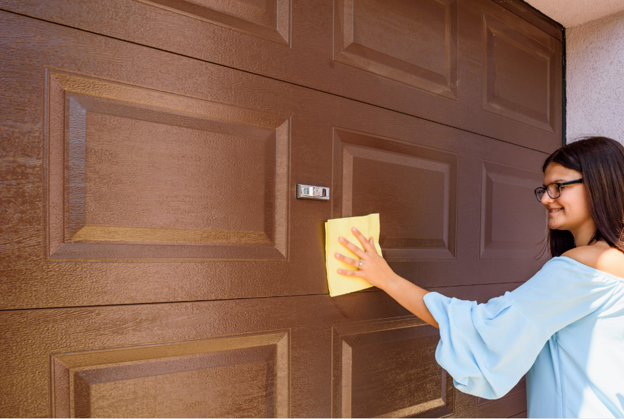
The best approach to cleaning the exterior of the door is to treat it like you’d treat a car finish.
For steel or painted doors:
- Rinse lightly (hose on gentle spray, no blasting)
- Wash with warm water + mild soap using a soft sponge
- Rinse again
- Dry with a microfiber cloth to prevent water spots
For faux wood or composite doors:
- Use the same gentle wash method
- Don’t use abrasive brushes (they can dull the finish)
For real wood doors:
- Use minimal water and a gentle cleaner
- Dry thoroughly
- If the finish looks faded or cracked, consider refinishing the exterior
If your door faces afternoon sun, wash early in the morning or evening. Cleaning in direct sunlight can cause soap to dry too fast and leave streaks.
Clean the Inside Face of the Door
The inside face collects dust, cobwebs, and grime, especially near the bottom seal.
- Wipe the panels down with a damp rag
- Pay attention to the bottom section and corners where gunk collects
- Dry it after to prevent rust on steel doors
This is also where you’ll notice early rust spots or bubbling paint.
Clean the Tracks
Tracks should be free of debris, not slippery.
How to clean tracks:
- With the door closed, vacuum loose dirt if you can
- Wipe the inside of the tracks with a rag
- Use an old toothbrush for stubborn buildup
- If needed, use a mild cleaner, then wipe dry
Don’t grease the track. Grease attracts dust and turns into sticky grit over time, which can actually make the door louder and rougher.
Clean the Safety Sensors
Those little sensors near the bottom of the tracks are easy to overlook; they’re a common cause of weird door behavior.
- Use a soft, dry cloth first
- If they’re really dirty, a slightly damp microfiber cloth works
If the door randomly reverses or refuses to close, dirty or misaligned sensors are often the cause.
Clean Weather Stripping and Bottom Seal
Summer heat dries rubber and vinyl seals, and once they crack, you’ll get dust, leaves, and pests sneaking in.
- Wipe seals with a damp rag
- Check for cracking, gaps, or sections pulling away
- If the bottom seal is stiff and flattened, it may not be sealing anymore
A good seal makes the garage easier to keep clean, with less dirt blowing in, and less water intrusion during surprise storms.
Clear the Garage Door’s Path
This isn’t glamorous, but it matters:
- Make sure nothing is stored close enough to bump the tracks.
- Keep the opener area and ceiling rail path clear.
- Don’t stack bins where they can shift and block sensors.
A lot of “garage door problems” are really “something’s in the way” problems.
What to Inspect
Do a Visual Inspection First
With the door down, take a slow look at:
Rollers
- Do they look chipped, cracked, or worn?
- Do they wobble in the track?
Hinges
- Any rust, cracks, or bending?
- Any loose screws/bolts?
Tracks
- Any dents?
- Any spots where the track looks slightly bowed?
Cables (Look, Don’t Touch)
- Do they look frayed?
- Do you see strands separating?
Springs (Look, Don’t Touch)
- Do you see a visible gap in the spring?
- Any heavy rust or obvious damage?
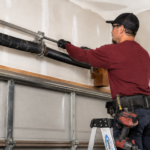
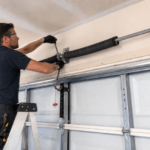
If you see frayed cables or spring damage, skip the DIY route and call a pro. Those parts are under serious tension and require professional adjustment.
Watch the Door Move
Run the door and watch from inside.
Listen for:
- Grinding
- Squealing
- Popping
- Rattling
- A sudden “thunk” at one spot
Watch for:
- Jerky movement
- The door shifting side-to-side
- A roller that “jumps” as it passes a point in the track
If you notice one specific “trouble spot,” don’t keep cycling the door 10 times. Repeated cycles can make a minor issue worse.
Tighten Hardware
Over time, vibration can loosen bolts.
- You can snug up hinge bolts and track bracket bolts if they’re clearly loose
- Don’t over-tighten and strip them
- Don’t loosen the bottom bracket or anything connected to cables
If you’re unsure, leave it alone and let a tech handle it.
Lubricate the Right Points
If you want the door to run quieter and smoother, lubrication helps, but only in the right spots.
Lubricate:
- Hinges (pivot points)
- Roller bearings (not the track)
- End bearings (near the top corners)
Don’t lubricate:
- Tracks
- Safety sensors
- Plastic parts not meant for lube
Spray lightly, wipe excess, and cycle the door a couple of times.
Quick Safety and Function Tests
Balance Test
This tells you whether the door is “heavy” and putting strain on the opener.
- Close the door
- Pull the red emergency release cord (disconnect opener)
- Lift the door manually to about waist height
- Release carefully
The door should stay in place or move very slowly. If it drops fast or shoots up: that’s a spring/balance issue, that’s your sign to call one of the most trusted garage door companies in Sonoma County.
Auto-Reverse Test
Place a small piece of wood (like a 2×4) flat on the ground under the door. Close the door.
It should reverse when it hits the object. If it doesn’t, stop using the door until it’s professionally adjusted.
Sensor Test
While the door is closing, wave a broomstick in front of the sensors.
The door should reverse. If not, you’ve got a safety issue that needs professional attention.
When to Call a Professional
Cleaning and basic inspections are great homeowner tasks, but certain problems aren’t meant to be DIY.
Call a professional if you notice:
- Frayed cables or cables that look uneven
- A spring gap or loud bang you can’t explain
- The door is crooked, stuck, or comes off track
- The door fails the balance test
- The opener strains or hums but the door barely moves
- You see cracked hinges, worn rollers, or damaged track that needs replacement
- The door slams shut or moves unpredictably
Those issues can turn into unsafe situations fast, especially in a busy household.
A Simple Summer Cleaning Routine
If you want a clean, reliable door all season:
Once at the start of summer:
- Wash door (outside and inside)
- Clean tracks and photo eyes
- Inspect rollers/hinges/hardware
- Light lubrication in correct spots
- Quick balance and safety tests
Mid-summer:
- Wipe photo eyes
- Listen for new noises
- Check that the bottom seal is still sealing
Before fall/winter:
- Inspect weather seals again
- Check for rust spots and touch up paint if needed
These simple care steps can prevent minor issues from becoming bigger problems later on.
Prep Your Garage This Summer
A summer garage cleanup is a perfect time to make sure your door isn’t quietly wearing itself down. Clean it the right way, inspect what you can safely inspect, and don’t ignore the warning signs.
If you want straightforward service and craftsmanship-first repairs, Mark’s Garage Doors has been serving Marin and Sonoma County communities for over 24 years. Contact us online or call (415) 497-0459 to schedule your free consultation today.

Owner / Founder
Mark Wilson is the owner and founder of Mark’s Garage Doors, a locally owned and operated company serving Sonoma County and the North Bay. Since founding the business, Mark has built a reputation for expert craftsmanship, responsive service, and honest communication. He specializes in residential and commercial garage door installation, service, and repairs, offering custom solutions designed for durability, performance, and curb appeal.
With decades of hands-on experience, Mark continues to lead his team with a focus on reliability, safety, and customer satisfaction—values that have made Mark’s Garage Doors a trusted name in the region.