Spring cleaning doesn’t have to be a whole weekend of chaos. If your garage has turned into a “we’ll deal with it later” zone, you’re not alone. The easiest way to start is to stop thinking about the entire garage, and just follow a simple checklist, one section at a time.
This guide includes the one thing most garage cleanouts forget: your door. A clean garage feels great… but if the garage door is noisy, jerky, or unsafe, it’ll ruin the win fast.
If you’ve been looking for garage door maintenance in Sonoma County, Mark’s Garage Doors has been serving Marin and Sonoma County communities for over 24 years.
The Garage Spring Cleaning Checklist
Set Yourself Up for Success
- Decide how deep a clean you want to accomplish
- Grab supplies: contractor bags, a broom, shop vac, microfiber rags, all-purpose cleaner, gloves
- Make 4 zones: Keep / Donate / Trash / Hazardous
- Open the garage door and add airflow
Declutter First
- Start with the floor: organize anything on the floor into 4 zones
- Toss obvious trash (broken hangers, empty bottles, ruined cardboard)
- Donate “good but unused” items
- Create an area for anything you can’t decide on
Rule of thumb: If it’s cheap to replace and you haven’t used it in a year, donate it.
Safely Handle Hazardous Items
This part matters because garages collect the weirdest things.
- Separate hazardous items:
- Paint
- Solvents
- Old gasoline
- Pesticides
- Car batteries
- Oily rags
- Do not toss these in regular trash
- Store temporarily in a sealed tote and keep away from kids/pets
- Plan a proper drop-off (your local waste program usually has options)
If you’re unsure whether something’s hazardous, treat it as so until you confirm.
Deep Clean Top-to-Bottom
- Dust the high spots first: shelves, rafters, corners
- Knock down cobwebs around the perimeter and garage door corners
- Vacuum/weep debris
- Wipe shelves and work surfaces with mild cleaner
- Spot clean the floor:
- Degrease oil spots (let it sit, scrub, rinse lightly)
- Don’t flood the garage, standing water causes more problems than it solves
Organize In a Way That’s Right for You
Organizing works best when it matches how you actually use your garage.
- Sort by category
- Store by frequency:
- Daily/weekly items at arm level
- Seasonal items up high
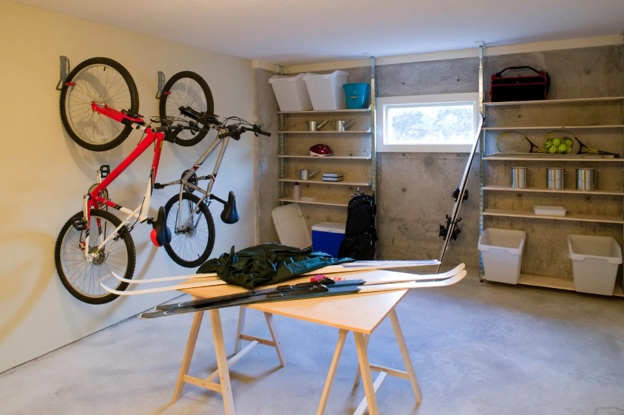
- Get things off the floor: hooks, shelves, overhead racks
- Label bins on two sides
- Create a “drop zone” near the door (shoes, backpacks, recycling, etc.)
If you buy storage before decluttering, you’ll just build a nicer system for keeping stuff you don’t need.
Don’t Skip Garage Door Maintenance
If you want the garage to feel truly refreshed, this is where you finish strong.
Basic garage door maintenance in Sonoma County is especially important after wet winters—moisture, temperature swings, and day-to-day use can make a door louder and uneven.
Quick Safety Check (2 minutes)
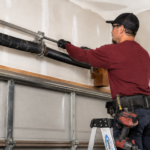
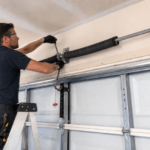
- Look at the springs, cables, and rollers
- Check for: frayed cables, rust, loose hardware, wobbly rollers
- Listen for new sounds: grinding, popping, screeching
Do not adjust springs or cables yourself. Springs are under serious tension; this should only be done by a professional.
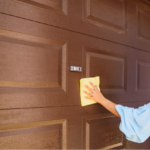
Clean the Door Tracks
- Wipe inside the tracks with a dry rag (or lightly damp)
- Remove built-up gunk—especially near the bottom corners
- Do not grease the tracks
Tracks should be clean, not slippery.
Lubricate the Right Parts
- Use a garage-door-safe lubricant (not heavy grease)
- Lightly lubricate:
- Rollers (if metal)
- Hinges
- Spring coils (light mist)
- Wipe excess so it doesn’t drip onto cars or the floor
This is one of the easiest steps in garage door maintenance in Sonoma County that homeowners can do safely, and it makes a noticeable difference in noise.
Test the Auto-Reverse
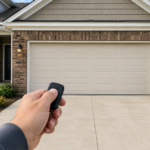
- Photo-eye test: wave a broomstick in front of the sensors while closing—the door should reverse
- Contact test: place a 2×4 flat on the ground under the door—the door should reverse when it touches
If it doesn’t reverse, stop using the opener until it’s adjusted. Safety systems are there for a reason.
Check the Door Balance
- Close the door
- Pull the emergency release (with the door fully closed)
- Lift the door halfway and let go
What you want: the door stays in place or moves very slowly.
If the balance is off, that’s a sign to schedule garage door maintenance in Sonoma County. Running an unbalanced door burns out openers faster.
When to Call a Pro
Call a garage door pro if you notice:
- The door is crooked, slamming, or shaking
- Cables look frayed or loose
- You hear a loud bang
- The opener struggles or the door feels unusually heavy
- You want a thorough tune-up as part of regular garage door maintenance
Finish Strong, Schedule Garage Door Maintenance
A clean garage feels great, and a reliable garage door makes it even better. Reach out to Mark’s Garage Doors for garage door maintenance in Sonoma County, and we’ll help you finish the job the right way.
To schedule a free estimate, call Mark’s Garage Doors at (415) 497-0459 or contact us online today.

Owner / Founder
Mark Wilson is the owner and founder of Mark’s Garage Doors, a locally owned and operated company serving Sonoma County and the North Bay. Since founding the business, Mark has built a reputation for expert craftsmanship, responsive service, and honest communication. He specializes in residential and commercial garage door installation, service, and repairs, offering custom solutions designed for durability, performance, and curb appeal.
With decades of hands-on experience, Mark continues to lead his team with a focus on reliability, safety, and customer satisfaction—values that have made Mark’s Garage Doors a trusted name in the region.